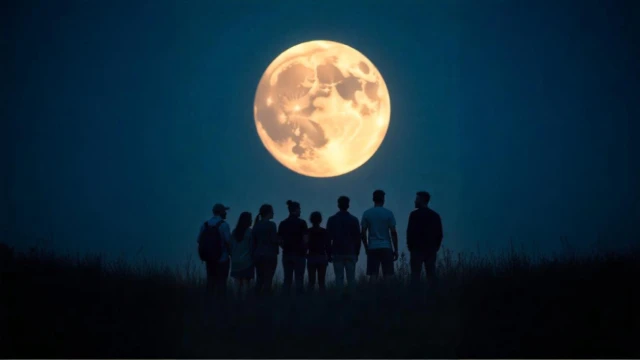
When and Where to Watch the ‘Buck Moon’ on July 10: A Complete Viewing Guide for Skywatchers
Summer skies are putting on another celestial show. The second full moon of the season—known as the Buck Moon—will rise on Thursday, July 10, 2025, and promises to be one of the most striking full moons of the year due to its low trajectory across the night sky.
According to the Old Farmer’s Almanac, the Buck Moon will reach peak illumination at 3:37 p.m. Central Time (4:38 p.m. Eastern), when it will not be visible from the U.S. However, skywatchers are in for a treat when it rises in the southeast just after sunset.
🌕 Why Is It Called the Buck Moon?
The Buck Moon gets its name from a natural phenomenon: male deer (bucks) begin growing new antlers in July. The name is rooted in a combination of Native American, colonial American, and European traditions, which historically named each full moon based on natural and seasonal cycles.
Other names for July’s full moon across Indigenous cultures include the “Salmon Moon” (Tlingit) and the “Feather Moulting Moon” (Cree), each tied to seasonal changes in wildlife.
📸 How and When to See the Buck Moon
The Buck Moon will appear fullest and most photogenic at moonrise, especially in the eastern sky during dusk. It’s also one of the lowest-hanging full moons of the year due to the moon’s summer position in the sky mirroring the sun’s high summer arc.
“To view it best, find a clear, unobstructed view of the eastern horizon—ideally from an elevated location or an open field,” experts advise.
Here are sample moonrise times for July 10:
-
New York City – Sunset at 8:29 p.m. EDT, moonrise at 8:54 p.m.
-
Los Angeles – Sunset at 8:07 p.m. PDT, moonrise at 8:33 p.m.
-
London – Sunset at 9:16 p.m. BST, moonrise at 9:46 p.m.
The moon will appear nearly full the night before and after as well, so don’t worry if you miss the exact moment.
🌒 What’s Next in the 2025 Lunar Calendar?
The Buck Moon is the seventh of 12 full moons in 2025. Here’s what’s coming next:
-
August 9 – Sturgeon Moon
-
September 7 – Harvest Moon (and a total lunar eclipse)
-
October 6 – Hunter’s Moon
-
November 5 – Beaver Moon
-
December 4 – Cold Moon
So far in 2025, we’ve already seen one blood moon eclipse, and three supermoons are still expected this year.