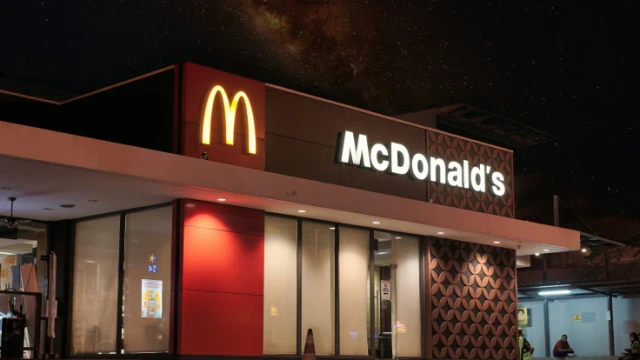
In a growing storm of public discontent, McDonald’s is under intense scrutiny as a nationwide boycott, spearheaded by The People’s Union USA, kicks off this week. The movement accuses the global fast-food giant of prioritizing profit over people, fueling frustration over soaring prices, alleged tax avoidance, and the retreat from its once highly-touted diversity and inclusion commitments.
John Schwarz, founder of The People’s Union USA, articulated the movement’s frustration in a viral social media post: “This is about far more than burgers and fries — it’s about corporate power run amok. When we come together and hit their wallets, they’re forced to listen.”
The boycott comes at a time when American consumers, already grappling with economic pressures, are losing patience with perceived corporate exploitation. McDonald’s average menu prices have surged by nearly 40% since 2019 — a figure that many say far outpaces inflation and unfairly burdens working-class families. While the company cites rising operational costs as the driving force behind the increases, critics argue that record profits tell a different story. Between 2020 and 2023, McDonald’s net income soared by an astonishing 79%, reaching close to $8.5 billion.
Adding fuel to the fire are revelations about the company's shifting stance on diversity, equity, and inclusion (DEI). Earlier this year, McDonald’s quietly dismantled several DEI initiatives, including aspirational hiring goals and third-party workplace evaluations. The rebranding of its Diversity Team into a more vaguely named “Global Inclusion Team” has only deepened skepticism about the company’s true commitment to social responsibility.
Schwarz’s People’s Union USA frames the boycott as part of a broader “economic blackout” movement, challenging not just McDonald’s, but a host of corporate behemoths they believe have betrayed the public trust. “We’ve seen performative allyship time and time again — hollow promises made for public relations while systemic inequality persists behind closed doors,” Schwarz asserted.
While McDonald’s maintains that its franchisee-led model gives operators flexibility to set prices and that its diversity values remain intact, the company’s response has done little to quell mounting backlash. Political figures have also entered the fray; several U.S. Senators recently penned a letter accusing the company of price gouging and exploiting tax loopholes, adding legislative heat to the growing public outcry.
Internationally, McDonald’s corporate tax strategies have also drawn condemnation. In 2022, French authorities secured a $1.3 billion settlement over allegations of illegal income shifting — a move that critics cite as evidence of a long-standing pattern of aggressive financial maneuvering.
Despite skepticism from some experts who question the economic impact of consumer boycotts against such massive corporations, the movement’s momentum is undeniable. Celebrity endorsements, viral social media campaigns, and the growing frustration of everyday consumers are amplifying the protest’s reach.
For many Americans, this boycott is about more than one fast-food chain; it’s a symbol of a wider battle against unchecked corporate power, shrinking accountability, and growing inequality. As Schwarz puts it, “This isn’t just a fight against McDonald’s — it’s a fight for fairness, dignity, and a system that serves people, not just shareholders.”
With further boycotts planned against other industry giants like Amazon, Starbucks, and Walmart, The People’s Union USA is signaling that this movement is only just getting started.