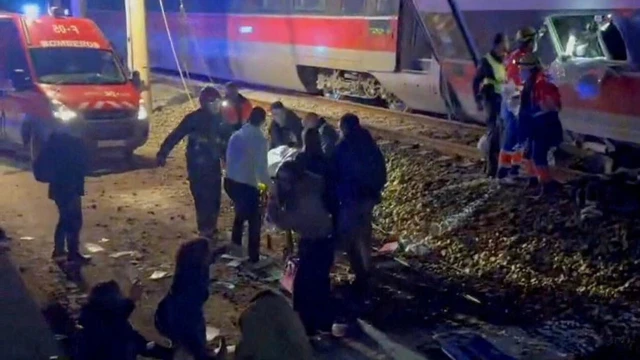
Spain is in mourning after one of the deadliest rail disasters in its modern history left at least 39 people dead and more than 170 injured in a high speed train collision in Andalusia.
The crash occurred Sunday evening near the town of Adamuz in Cordoba province when a train traveling from Malaga to Madrid derailed and crossed onto an adjacent track, colliding with an oncoming train heading from Madrid to Huelva. Both trains were carrying nearly 500 passengers combined.
Emergency crews worked through the night in freezing conditions to rescue survivors from twisted metal and collapsed carriages. At least 73 people remain hospitalized, with 24 in serious condition, including four children.
Witnesses described scenes of chaos and terror. Passengers said the carriages shook violently before lights went out and parts of the roof collapsed. Some survivors used emergency hammers to break windows and climb out of the wreckage.
Rescue officials said several wagons were severely mangled, with at least one carriage sliding down a slope, making access difficult. Firefighters confirmed that some victims had to be removed to reach those still alive.
Tragedy in southern Spain🇪🇸: a high-speed train derailed, crossed tracks, and hit another train head-on.
— Sumit (@SumitHansd) January 19, 2026
More than 21 reportedly killed, and at least 100 injured, with 25 suffering critical injuries#Spain | #trainaccident pic.twitter.com/UHas6y2Luk
Spanish Transport Minister Oscar Puente said the derailment was “extremely strange” because it occurred on a straight section of track that had been renovated last year. Investigators are now examining signaling systems, track conditions, and train speed data to determine the cause.
Prime Minister Pedro Sanchez called the tragedy “a night of deep pain” for the nation and offered condolences to the families of the victims. King Felipe VI and Queen Letizia also expressed their sorrow and support for those affected.
High speed rail services between Madrid and major Andalusian cities including Cordoba, Seville, Malaga, Granada, and Huelva have been suspended. Assistance centers have been established at multiple stations to support relatives and displaced passengers.
Spain operates one of the largest high speed rail networks in Europe, and the disaster has reignited urgent questions about rail safety and emergency response preparedness.
As rescue operations continue and the investigation unfolds, Spain faces a long road toward answers and healing after a night that changed hundreds of lives forever.


