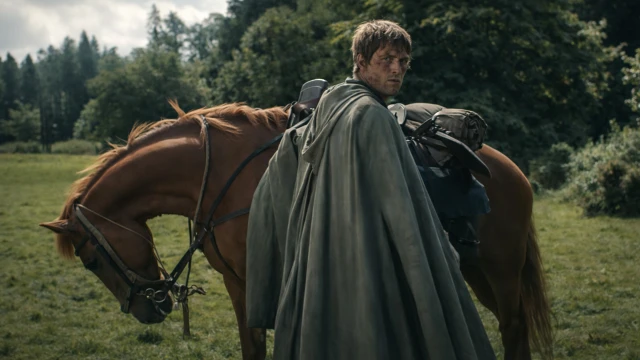
At Summerhall in Westeros, the dust had barely settled when HBO’s Knight of the Seven Kingdoms closed its first season with a restrained but meaningful finale that prioritized character fallout over spectacle.
The episode, titled The Morrow, functions largely as an epilogue following the violent trial by seven that ended with the shocking death of Prince Baelor Targaryen. Instead of escalating the conflict, the finale slows the pace and examines how the event reshapes the futures of Ser Duncan and young Prince Aegon.
Ser Duncan Escapes Formal Punishment
One of the biggest questions heading into the finale was whether Ser Duncan would face consequences for the deadly chain of events. The answer arrives quickly.
From a legal and religious standpoint, Duncan is cleared. The gods have spoken through the trial’s outcome, and no formal punishment is imposed. However, the political tension remains thick.
Prince Valarr openly resents Duncan’s presence at Baelor’s funeral pyre, while Prince Maekar warns that history may judge the hedge knight harshly.
“Each time a battle is lost or a crop fails,” Maekar says, “the fools will say Baelor would not have let that happen.”
That line underscores the episode’s central theme: even when justice is settled, reputations are not.
Dunk and Egg Face a Turning Point
The emotional core of the finale revolves around the future of Dunk and Egg.
Prince Maekar initially pushes Duncan to formally serve House Targaryen and continue training Aegon at Summerhall. Duncan resists at first, clearly exhausted by royal politics.
His blunt remark, “Think I’m done with princes,” briefly disappoints Egg and suggests the partnership may end.
But the turning point comes after Duncan’s encounter with the troubled Prince Daeron, whose cynical warning about the Targaryen family forces Dunk to reconsider.
Recognizing Egg’s need for grounding away from court influence, Duncan ultimately agrees to continue as his knight mentor, preserving the central relationship that drives the series.
Side Characters Get Their Farewell Moments
True to its epilogue structure, the finale also checks in on several supporting characters.
Raymun Fossoway receives a warm send-off after emerging from the trial as a newly minted knight. In a symbolic gesture, Duncan returns Ser Arlan’s old horse, Sweetfoot, ensuring the animal’s peaceful retirement.
Lyonel Baratheon also exits on an upbeat note, maintaining the show’s balance between political tension and character warmth.
These quieter beats reinforce the season’s intentionally intimate tone, a clear contrast to the large scale conflicts typical of the wider Game of Thrones universe.
Season 2 Path Already Taking Shape
The finale subtly sets the stage for what comes next without relying on a heavy cliffhanger.
Dunk’s decision to continue with Egg keeps the narrative engine intact, while dialogue hints that their journey will soon take them toward Dorne. Production on Season 2 is already underway, signaling HBO’s confidence in the slower, character driven approach.
Why This Finale Feels Different
Unlike many franchise finales that chase shock value, The Morrow leans into reflection and reset. The episode prioritizes emotional consequences, mentorship, and reputation over battlefield drama.
For viewers expecting explosive twists, the ending may feel understated. But for fans invested in the personal journey of Dunk and Egg, the finale delivers a clear thematic payoff.
The season closes not with spectacle, but with direction.


