Key Points
-
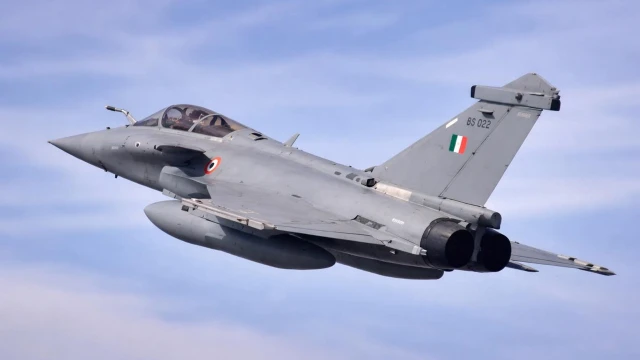
India flew Rafale jet BS-022 at its Republic Day parade, countering Pakistan’s claim it was shot down in the 2025 conflict.
-
Pakistan says it downed multiple Indian aircraft during Operation Bunyan-un-Marsoos, while India refers to the episode as Operation Sindoor and denies any Rafale losses.
-
Former US President Donald Trump has stated that several fighter jets were shot down during the hostilities without naming either side.
India’s Republic Day fly-past in New Delhi has reignited international discussion over conflicting claims from last year’s brief but intense India-Pakistan military confrontation, after the Indian Air Force showcased a Rafale fighter jet bearing tail number BS-022.
Indian officials said the appearance of the aircraft demonstrated that none of their Rafale jets were damaged during the operation India calls Operation Sindoor, the four-day standoff that followed cross-border strikes in May 2025. The fly-past featured 29 aircraft in coordinated formations, highlighting India’s air power and operational readiness.
Rafale BS 022 Was Flying Actively In Republic Day Sindoor Formation Fly Past.
— NOTAM INDIA 🇮🇳 (@notam_in) January 26, 2026
Pakistan Claimed That They Shot Down Rafale BS 022 On 7th May During Operation Sindoor.Another Pakistani Propoganda Busted
📷Video Credit: @IAF_MCC pic.twitter.com/iGIVRQnuft
Pakistan, however, continues to stand by its version of events, referring to the episode as Operation Bunyan-un-Marsoos, meaning “Solid or Cemented Structure.” Pakistani authorities described it as a retaliatory operation launched on May 10, 2025, following Indian military actions earlier that week. According to Pakistan’s official briefings, the operation targeted selected Indian military installations and missile-related sites using long-range and precision weapons while claiming to avoid civilian areas.
In a detailed press briefing, Pakistan Air Force spokesman Air Vice Marshal Aurangzeb Ahmed said the clash involved more than 100 aircraft and unfolded as a beyond-visual-range engagement. He stated that Pakistani forces employed long-range missiles and electronic warfare measures and claimed that Indian Rafale, MiG-29 and Su-30 aircraft were hit based on radar and electronic tracking data.
⚡️🇵🇰Very impressive breakdown by Pakistan Airforce spokesman Ahmed Aurangzeb of the 'largest air battle in history' that allegedly took place yesterday. pic.twitter.com/xPGA9HSHXk
— SIMPLICIUS Ѱ (@simpatico771) May 10, 2025
Pakistan’s narrative frames the operation as a defensive response and a demonstration of national unity, drawing its name from a Quranic verse symbolizing strength and cohesion. Officials said international diplomatic efforts, including US involvement, later helped bring about a ceasefire.
India has rejected Pakistan’s claims and has not acknowledged the loss of any Rafale jet. New Delhi maintains that its aircraft returned safely and that Pakistan’s assertions were not supported by verifiable evidence. Indian officials also dispute the effectiveness of Pakistan’s electronic warfare claims.
International reporting has presented a more complex picture. A Reuters investigation cited US and regional defense officials who said at least one Rafale was likely downed, attributing the outcome to Indian intelligence misjudging the range of Chinese-made PL-15 missiles used by Pakistan’s J-10C fighters. France’s air force chief and a senior Dassault Aviation executive later said India had lost one Rafale and two other aircraft during the confrontation, though without providing operational specifics.
Former US President Donald Trump has also commented publicly on the conflict, saying that “four or five” fighter jets were shot down during the hostilities. He did not specify whether the aircraft belonged to India or Pakistan. Pakistan has claimed it downed five Indian jets, while India has said it downed “a few” Pakistani planes. Islamabad denies losing any aircraft but acknowledges that some of its air bases were hit.
Trump restates his claim on India Pakistan Ceasefire. Says, '7 planes were shot, it cud have been a nuclear war', recalling out how "Pakistan PM said Prez Trump saved millions of lives". India Pak said, 'no no' when he warned of a 200% tariff.
— Sidhant Sibal (@sidhant) October 19, 2025
Ctsy: Fox News pic.twitter.com/ARHPJl7RP4
The reappearance of Rafale BS-022 at India’s Republic Day parade has become a focal point in this dispute. Defense analysts note that ceremonial fly-pasts alone cannot conclusively verify wartime losses and that serial numbers or markings can be replicated for demonstration purposes.
Experts say the episode highlights the uncertainty that surrounds modern air combat, where engagements rely heavily on radar, missile telemetry and classified intelligence rather than visible wreckage. With both governments maintaining sharply different narratives under the names Operation Sindoor and Operation Bunyan-un-Marsoos, the full account of what occurred remains unresolved.
For now, the Rafale fly-past has revived a debate that continues to shape regional perceptions of the 2025 conflict, underscoring how technology, politics and national narratives intersect in interpreting modern warfare.


