Key Points:
-
Strike launched after intelligence confirmed Khamenei’s presence at a secret Tehran meeting
-
Operation reportedly advanced from evening to morning to maximize surprise
-
Iran responded with drones and missiles across the region
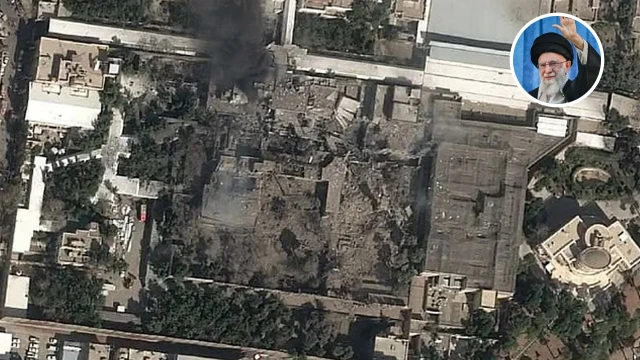
Tehran, Iran: Just after 8:17 a.m. local time on Saturday, the quiet streets surrounding a fortified compound in northern Tehran were shattered by the sound of explosions that residents later described as “two sharp blasts followed by a rolling tremor.” Within minutes, smoke rose above the guarded perimeter of the site long believed to host confidential meetings of Iran’s top leadership.
According to Reuters, US and Israeli officials moved quickly once intelligence sources confirmed that Supreme Leader Ayatollah Ali Khamenei was about to convene a meeting with senior advisers. The strike, initially planned for Saturday evening, was advanced when Israeli intelligence reportedly learned that the meeting had been shifted to the morning.
US officials cited by international media said the primary objective was surprise. “The window was narrow,” one official told reporters on background. “Delay would have risked losing visibility.” The intention, according to those briefed on the operation, was to prevent Khamenei from relocating to one of several secure sites believed to be part of his protective routine.
The attack reportedly began with precision strikes on the heavily secured compound in Tehran. Satellite imagery reviewed by international agencies later showed extensive structural damage across an estimated 11,400 square meters of the site, including the central meeting wing.
The New York Times reported that the CIA had been monitoring Khamenei’s movements for several months. US intelligence allegedly identified what officials described as a rare high-level gathering involving top security figures. Information about the meeting and Khamenei’s presence was shared with Israel, after which the operation was finalized.
At the time of the strike, Khamenei was reportedly meeting with Ali Shamkhani, former secretary of Iran’s National Security Council, and Mohammad Pakpour, commander of the Revolutionary Guards. Iranian state media confirmed their deaths along with the Supreme Leader’s on Sunday morning, declaring a period of national mourning and describing the event as martyrdom.
According to Iranian reports, some members of Khamenei’s family were also killed in the attack, though official casualty numbers have not been fully disclosed.
The timing carries strategic weight. Saturday morning in Tehran meant a compressed reaction window. Security rotations were reportedly lighter compared to weekend evening gatherings, and regional air traffic patterns were different than weekday conditions. Intelligence analysts suggest that early-morning operations reduce the likelihood of rapid dispersal.
This marks one of the most significant targeted operations involving a sitting head of state in recent decades. The last comparable high-profile targeted killing was the 2020 US drone strike on Qassem Soleimani in Baghdad, which triggered weeks of regional escalation and financial market volatility. Oil prices at that time jumped nearly 4.7 percent in early trading.
Within hours of Saturday’s strike, Iran launched retaliatory drone and missile attacks targeting multiple countries in the region, including Israel. Regional air defense systems were activated across at least three neighboring states, according to defense officials.
What this changes
The death of Iran’s Supreme Leader creates an immediate succession vacuum inside a tightly controlled political structure. Markets are likely to react sharply, particularly crude oil futures and regional insurance rates for shipping through the Strait of Hormuz. Any disruption to that corridor, which handles roughly 20 percent of global oil shipments, could affect gasoline prices in the United States within days.
Why this matters now
The Middle East was already navigating heightened tensions involving proxy conflicts and nuclear negotiations. The removal of Iran’s highest authority alters the strategic balance overnight. How Tehran restructures leadership, and how Washington and Jerusalem respond to retaliation, will shape regional security calculations for months.
There was no immediate independent confirmation from neutral observers inside Tehran, and communications across parts of the capital were reportedly disrupted for nearly three hours after the strike.
By Sunday evening, large crowds had gathered in central Tehran, chanting slogans and holding black flags. The atmosphere was tense. Security forces were visible at major intersections, and several embassies issued shelter advisories to their nationals.
The situation remains fluid.


