
Key Points
-
Bitcoin slipped below $65,000 amid renewed tariff uncertainty
-
Analysts cite weak liquidity and macro risk pressure
-
Ether and major altcoins also moved lower in broad selloff
In New York trading late Monday, Bitcoin tumbled below the $65,000 mark, extending its recent slide as fresh tariff uncertainty from Washington weighed heavily on risk assets.
The world’s largest cryptocurrency was trading near $64,826, down more than 5 percent on the day, according to market data. The move came shortly after President Donald Trump signaled plans to raise global tariffs to 15 percent, a step that injected new volatility into already fragile crypto sentiment.
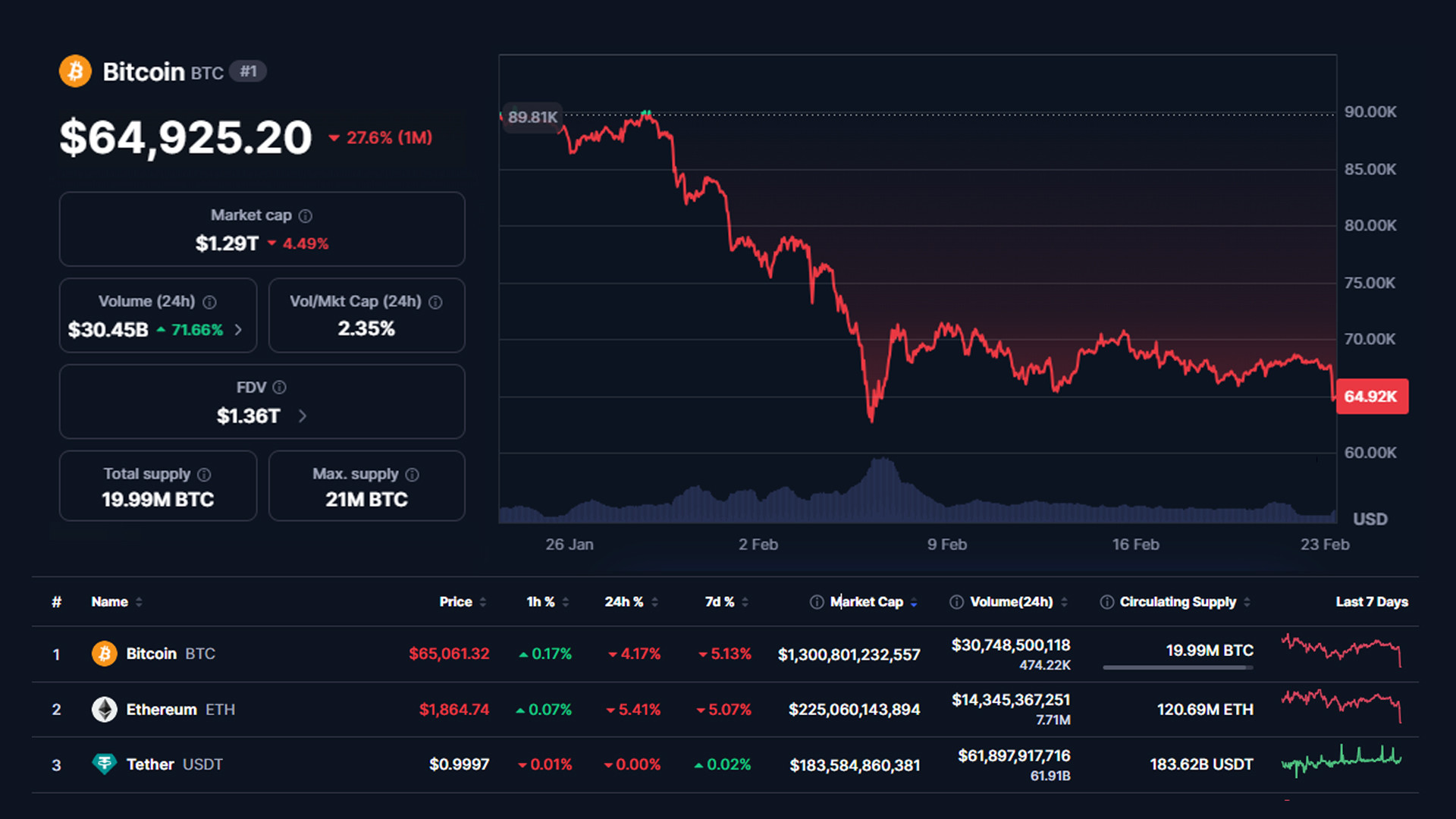
Tariff shock rattles crypto confidence
Market watchers say the selloff reflects growing investor caution rather than a single headline shock.
Jeff Mei, chief operating officer at blockchain firm BTSE, said investors are trimming exposure to digital assets amid fears that higher tariffs could trigger broader market weakness.
“We believe the sudden uptick in tariff rates is causing investors to sell crypto assets in anticipation of a more serious market decline,” Mei said.
The drop highlights how closely crypto is now tied to macro policy signals, particularly trade tensions and geopolitical risk.
Bear market signals emerging
Research analysts also pointed to structural weakness in the current crypto cycle.
Markus Thielen of 10x Research said Bitcoin’s decline fits a classic low conviction phase marked by thin liquidity and cautious positioning. He warned the market could test deeper support levels if momentum fails to recover.
Bitcoin is now down roughly 26 percent year to date and more than 47 percent from its October peak above $125,000, underscoring the severity of the correction.
Altcoins follow Bitcoin lower
The weakness was broad across digital assets.
Ether, the second largest cryptocurrency, dropped nearly 6 percent to around $1,865, while other major tokens including XRP, Solana and Dogecoin also posted losses as risk appetite cooled.
At the same time, traditional safe haven assets moved in the opposite direction. Spot gold gained about 1.5 percent Monday, reinforcing the growing divergence between crypto and physical safe havens.
What analysts are watching next
Some strategists argue the pullback may reflect the crypto market’s typical four year cycle rather than purely macro stress.
Bitwise CIO Matt Hougan recently noted the current retracement mirrors past post rally corrections, with capital rotating toward artificial intelligence equities and gold.
For now, traders remain focused on three near term risks:
-
Further tariff escalation
-
Geopolitical tensions in the Middle East
-
Liquidity conditions across crypto markets
Until those pressures ease, analysts expect Bitcoin to remain highly sensitive to macro headlines rather than purely crypto specific catalysts.