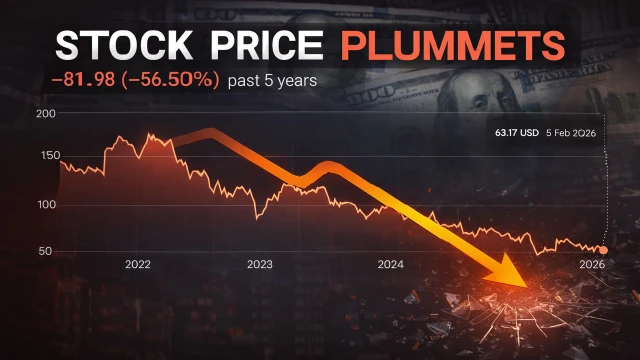
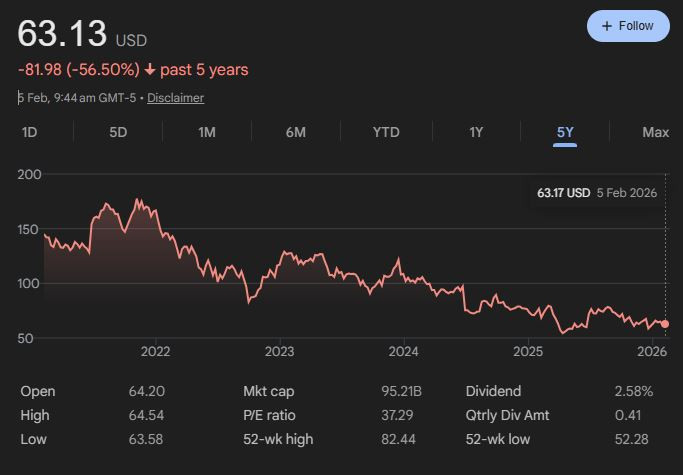
Shares of Nike are trading around $63, marking a sharp fall of more than 56% over the past five years and underscoring the challenges facing one of the world’s most recognizable athletic brands.
After peaking above $140 in 2021, Nike’s stock has steadily retreated as the company navigated a tougher retail environment, slowing demand in key international markets, and rising promotional activity across the athletic wear sector. The decline has erased tens of billions of dollars from Nike’s market value, which now stands near $95 billion.
Investor confidence has been weighed down by margin pressure driven by higher costs, discounting, and shifting consumer preferences. While Nike remains profitable, its current price-to-earnings ratio near 37 highlights ongoing concerns about valuation relative to growth prospects. The stock also remains well below its 52-week high of $82, signaling skepticism about a near-term recovery.
Management has outlined a reset strategy focused on streamlining operations, recalibrating its digital and wholesale mix, and refocusing on core performance categories. However, the broader athletic market has become more crowded, with rivals capturing market share and pushing pricing power lower across the industry.
Nike continues to return cash to shareholders through dividends, offering a yield of roughly 2.6%, which provides some downside support. Still, markets appear unconvinced that dividends alone can offset slowing revenue momentum and competitive headwinds.
The coming quarters are likely to be critical. Investors will be looking for clearer signs of stabilizing margins, improved demand trends, and evidence that Nike’s brand strength can translate back into consistent earnings growth. Until then, the stock’s five-year chart reflects a company still searching for its next growth chapter.