Key Points
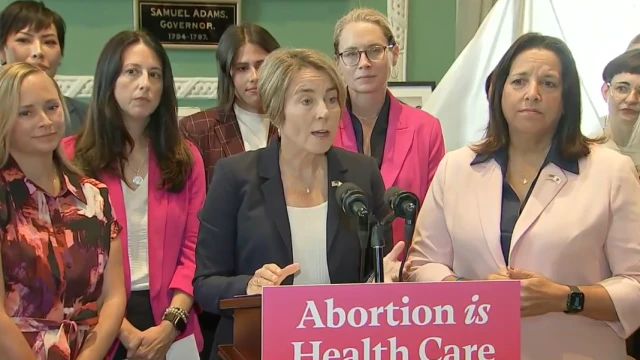
- Gov. Maura Healey signed the Prioritizing Patient Access to Care Act on August 10.
- The law changes Massachusetts rules for abortions at 24 weeks of pregnancy or later.
- Physicians can now provide abortion care based on their professional judgment rather than the previous list of statutory conditions.
- The change removes the state's previous gestational restrictions for later abortions.
- The law has triggered strong reactions from both abortion-rights supporters and opponents.
Boston, Massachusetts: Massachusetts has expanded abortion access after Gov. Maura Healey signed legislation Monday changing the state's rules for abortions later in pregnancy.
Healey signed the Prioritizing Patient Access to Care Act, a measure that changes how abortions at 24 weeks of pregnancy or later are regulated in the state.
Under the previous law, abortions after 24 weeks were permitted only under specific circumstances, including when considered necessary to protect the patient's life or physical or mental health, or in certain cases involving serious fetal diagnoses.
The new legislation removes those specific statutory conditions and states that an abortion may be performed based on the professional judgment of the physician. The law also provides that a medical review process cannot override the professional judgment of the treating physician and the patient or the patient's health care proxy.
Healey and supporters of the measure have argued that the change will give patients and doctors greater flexibility when dealing with complicated pregnancies and serious medical circumstances.
Speaking after signing the legislation, Healey said families facing difficult pregnancy diagnoses should be able to make decisions in consultation with their doctors.
The central change concerns pregnancies that have reached 24 weeks or more.
Previously, Massachusetts law specified particular circumstances that had to apply before an abortion could be performed after that point.
The new law instead relies on the professional judgment of the physician, removing the previous statutory list of qualifying conditions.
This means Massachusetts no longer maintains the same statutory gestational restrictions for abortions later in pregnancy that existed under the previous framework.
Supporters said the legislation was intended to address situations in which patients with serious pregnancy complications could face difficulties obtaining care within Massachusetts.
The measure had been under consideration in the Massachusetts Legislature since 2025 before advancing through the House and Senate in 2026.
The House passed the final H.5595 legislation by 119 votes to 33 on July 22, according to the Massachusetts General Court's legislative record.
The measure subsequently reached Healey's desk before she signed it on August 10. Current local reporting confirms the signing and describes the law as expanding access to abortion later in pregnancy.
Supporters of the law say decisions involving complicated pregnancies should be made by patients and medical professionals rather than determined by statutory restrictions.
Opponents have strongly criticized the legislation, arguing that removing the previous restrictions goes too far and could allow abortions later in pregnancy under broader circumstances.
The debate reflects the wider national divide over abortion policy following the U.S. Supreme Court's 2022 decision overturning Roe v. Wade, which returned substantial authority over abortion regulation to individual states.
The new law represents a significant change to Massachusetts' abortion framework, particularly for pregnancies at or beyond 24 weeks.
For patients and healthcare providers, the practical impact will depend on how the revised law is implemented and interpreted in medical settings.
Massachusetts now joins a small group of U.S. jurisdictions without a statutory gestational limit in the same form as the previous Massachusetts framework. Recent reporting describes Massachusetts as the 10th state, alongside Washington, D.C., to eliminate gestational restrictions.
Healey's signing marks a major change in Massachusetts abortion policy, shifting the legal framework for later abortions away from specific statutory conditions and toward the professional judgment of physicians and decisions involving patients and their healthcare providers.


