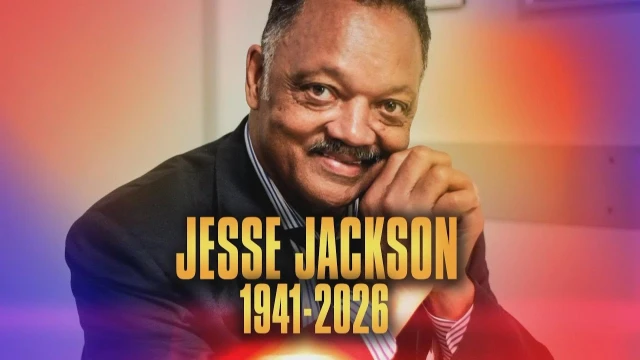
Chicago, Illinois: Rev. Jesse Jackson, one of the most influential civil rights leaders in modern American history and a longtime advocate for racial justice and voting rights, has died at the age of 84, his organization confirmed Tuesday.
Jackson, who stood beside Rev. Martin Luther King Jr. during the civil rights movement and later became a national political force, spent more than six decades campaigning for equality, economic justice, and expanded political representation for marginalized communities.
Born in Greenville, South Carolina, during the era of racial segregation, Jackson rose to prominence in the 1960s after joining King’s movement and participating in landmark demonstrations across the United States. He was present in Memphis in 1968 when King was assassinated, an event he later described as a defining moment of his life. “Every time I think about it, it is like pulling a scab off a sore,” Jackson once said, recalling the tragedy.
In the years that followed, Jackson founded Operation PUSH and later the Rainbow Coalition, initiatives aimed at uniting minority communities, labor groups, and progressive voters into a broader political alliance. His activism extended beyond U.S. borders, where he campaigned against apartheid in South Africa and advocated for global human rights causes.
Jackson twice sought the Democratic presidential nomination in 1984 and 1988, winning several primaries and helping reshape the party’s coalition. His campaigns expanded voter registration efforts among African Americans and other minority communities, laying political groundwork that later contributed to the election of President Barack Obama in 2008. Obama later said, “We stood on his shoulders,” crediting Jackson’s campaigns with helping redefine what was politically possible.
Despite declining health in recent years due to a rare neurological condition, Jackson continued to appear at public events and speak on issues including voting access, economic inequality, and civil rights protections.
Leaders across the political spectrum paid tribute to Jackson, describing him as a historic figure whose activism connected multiple generations of the American civil rights struggle. His decades-long presence in public life helped transform grassroots protest movements into lasting political change, making him one of the defining voices of the post-civil-rights era.